
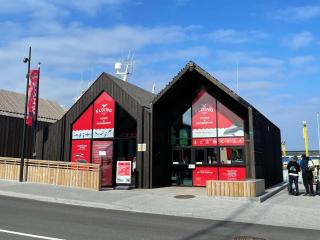
our office in Reykjavik

Right in the heart of Reykjavík you find Elding's ticket office well positioned at the charming Old Harbour. It has become one of the city's liveliest quarters with its quirky little shops, galleries, restaurants and a range of marine activities. Our boats are conveniently located just a little further down the road to our ticket office. Boarding is through our stationary boat, Fífill, which also serves as a Visitor Center, Wildlife Exhibition, Café and Souvenir Shop.
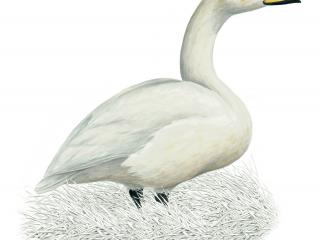
The Whooper Swan is the largest bird and the only swan species that is found on Iceland. They are frequently seen on the two Puffin colonies we visit Lundey/Akurey. Swans pair up for life and the males will help construct the nest, which is not common with wildfowl. Whooper swans have been recorded flying at heights up to 8,200m when ambient temperatures are at -40°C.

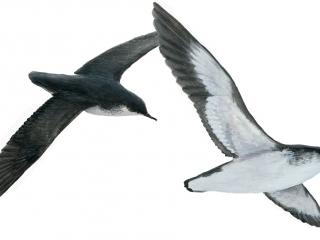
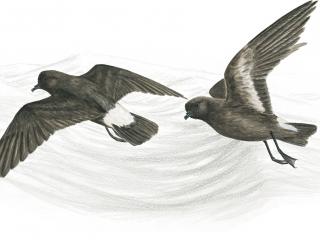
Petrels are part of the tubenose family of seabirds, which also include the fulmars, albatrosses and shearwaters. The storm petrels are very small birds that you usually see flying fast by very close to the water's surface where the air currents are strongest. We mostly see them when departing from hafnarfjörður, Keflavík or Grindavík harbours. 

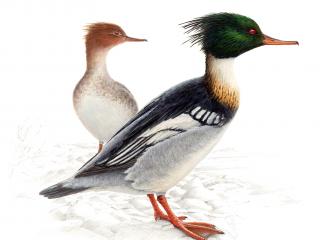
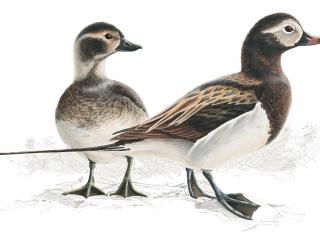
These are seen in larger numbers in the wintertime in areas, which are free from ice. They are a freshwater duck but are seen frequently in harbours. They have a long sharp beak for feeding on small schooling freshwater or marine fish and invertebrates. They are a close relative and strongly resemble the Goosander. The only way to identify them correctly is by looking at the males.

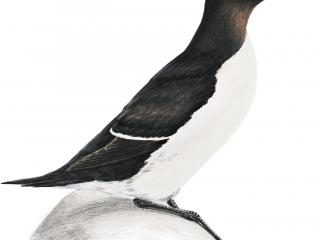
The razorbill is also apart of the Auk family like the puffins. They look more like the guillemots but they are easily recognizable by their deep, flat-sided bill with white bands along the length and vertical band rear the tip. Their eggs are uniquely patterned so that the parents can locate them on the densely populated cliff ledges.

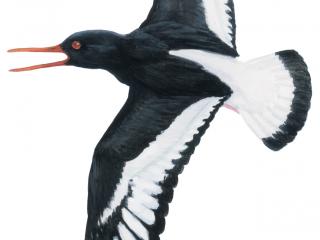
Oystercatchers can be seen both on the floating docks in the harbour and also on the islands we visit to see the puffins. They specialise on the way they feed on bivalves (mussels, cockles), some oystercatchers pry the two shells apart (these oystercatchers have a very long pointed bill) and some hammer the shells (these oystercatchers have a very blunt short bill).

The Manx Shearwater is a close relative of the fulmar (Procellaridae). They are usually seen in large flocks. They mainly glide on the air currents rather than flap their wings usually close to the waters surface. They are long lived getting as old 50 years.  In 2003/2004 a Manx Shearwater in Northern Ireland was recorded as the oldest known wild bird getting to 55 years old. 

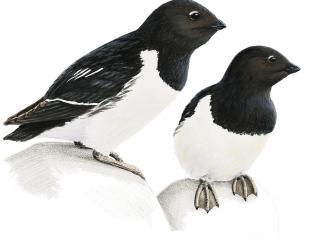
This little Arctic seabird was once a common breeder with hundreds of pairs breeding in various places in N. Iceland for example Grímsey Island but since 1900 they have declined greatly, probably due to climate change. A couple of pairs may now breed here but where is unknown.