Image
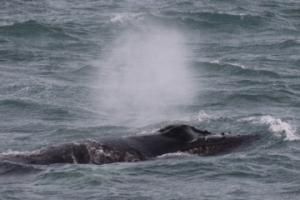




We had strong winds today, but that didn't stop us from sailing the shores of Reykjavík. A few minutes into the tour, we spotted a humpback whale (Calamity) surfacing beautifully. After a while, we decided to see if the other humpback whale (Ekki) was still around and we found it closer to Esja. It came very close and very classily, pooped right in front of us!
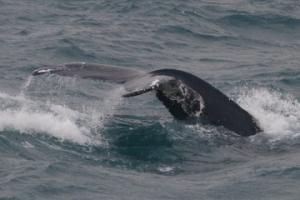
We had to go very close to the mainland to find the wildlife from the previous days. A passengers screamed while pointing on our left side, and there it was, a humpback whale (Calamity)! As we were repositioning the boat, we spotted a second blow further out which turned out to be another humpback whale (Ekki). We also spotted a grey seal in the shallow waters!

We did find very faded northern lights just above Mt Esja, but they were mainly visible through our cameras. They looked like a little arch that gradually faded through the night. We went back to the harbour and handed out complimentary tickets.
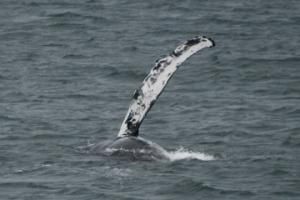
During the early moments of the tour we spotted lots of seals as we travelled around Viðey. In total we saw about 10 grey seals and 5 harbour seals in addition to 7+ harbour porpoises. Eventually we found 2 humpback whales at the foot of Mt Esja. They regularly came up for breaths and one of them (Calamity) even rolled and lifted its pectoral fin out of the water!
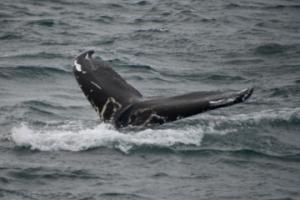
We sailed out on a very windy afternoon in search of cetaceans. On our way out of the harbour we saw 3 harbour porpoises before finding our first humpback whale (Calamity). We then found 4 grey seals and 2 harbour seals. We then also spotted the second humpback whale who was lunge feeding quite a lot!
By the end of the tour, we could see some northern lights above Mt Esja. Very weak and very little, since we had many clouds in the area, so we decided to give out complimentary tickets so the passengers have another chance.
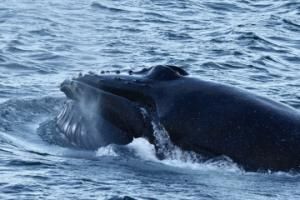
As we travelled out on two boats, we spotted a blow around Viðey island, and then another one! We still had the same 2 humpback whales that we have been seeing in the last couple of days. One of the whales (Calamity) breached right in front of us while the second whale (Ekki) popped up close to us while lunge feeding! Incredible sightings for each boat!
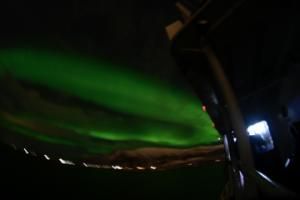
This evening we sailed out with high hopes as the sky looked promising. As soon as we left the harbour we already saw some green! The northern lights can be fickle, but there was a point that they got stronger and the whole boat was green!
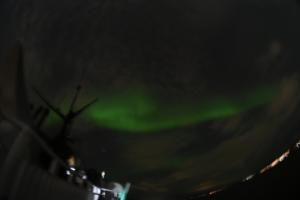
Before the tour, we could see many stars at the sky and we were happy that it wasn't as cloudy as we thought it would be. But we got even happier when we started the tour and we already had northern lights in the sky! What an amazing night!
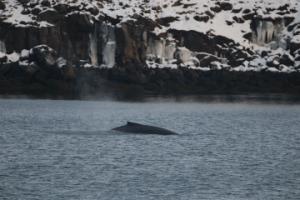
We went behind the islands close to Reykjavík to see if the 2 humpback whales from the last days were still there. Luckily, they were! One was frequently lunge feeding showing us its big rostrum and filled mouth and after feeding a bit, it seemed like one of them took a break to poop, right in front of us! We then spotted 2-3 grey seals and 2-3 harbour porpoises as well!
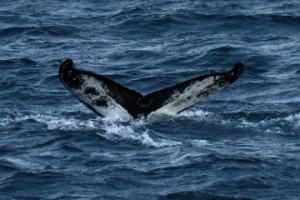
The sea was calm with some eastern wind. The same humpback whales from last few days were still there swimming and feeding separately. We stayed for about half an hour with each of them. One of them was very unpredictable, changing directions very often and the other one went for short 4-5 minutes dives, but showing its beautiful fluke!
We went near Esja and patiently waited while listening to rock classics from the 60s, but unfortunately no lights appeared. We went back to the harbour and gave our passengers complimentary tickets. Hopefully next time we will be luckier!