


Image
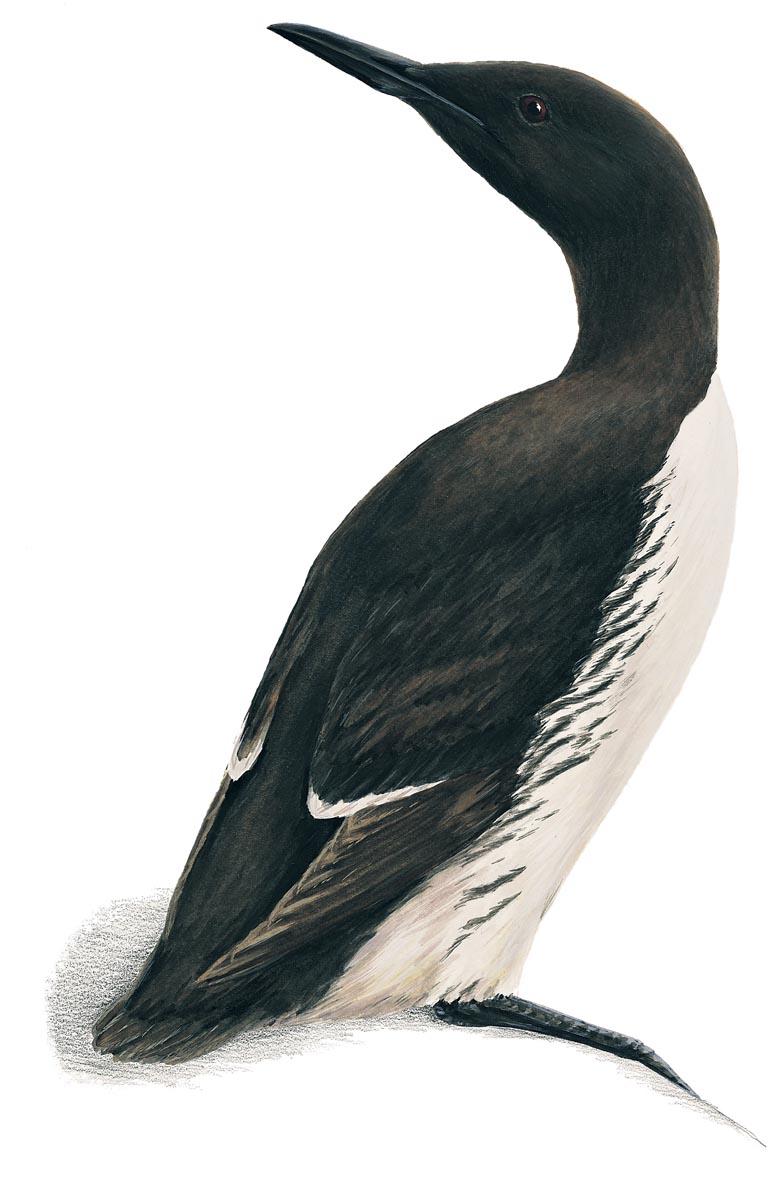
Guillemots are observed in there hundreds if not thousands on the sea and are a close relative of the Puffin. They are one of the deeper diving seabirds diving to a staggering 230m deep for their food but usually only dives between 50-100m. They nest in dense numbers on cliffs and their eggs are shaped in such a way that they roll in a circle so that they don’t fall of the cliff edges. There are some individuals that are found in the North Atlantic that have a white ring around their eye. These are called the ‘bridled guillemot’ these are not a separate species but are actually a polymorph of the common guillemot.
| Average Length: | 40 cm |
| Average Weight: | 690 g |
| Wingspan: | 67 cm |
| Diet: | Sandeels, capelin, herring, crustaceans |
| Est. population around Iceland: | ~ 700,000 pairs |
| Residence Period: | All year round |
| Nesting habitat: | Cliff ledges |
| Nesting Period: | Early May to Mid July |
| Clutch size (No eggs): | 1 |
| Incubation time (days): | 28-37 |
| Fledging time: | 18-25 |
| Typical life span (years): | 23 |
| Age at first breeding (years): | 5 |
| IUCN world Status: | Least concern |
| Major Threats: | Climate change, over fishing, entanglement in fishing gear, predation, pollution, overhunting |
| Other Names: | Langvía, Lomvie, Etelänkiisla, Trottellumme, Nurzyk zwyczajny, Araocomún, Zeekoet, Guillemot de Troïl, Lomvi, Sillgrissla |