


- Image
- Image
- Image
- Image
- Image
- Image
Tuesday, 22 July 2025
- CLASSIC WHALE TOUR | 09:00, 11:00, 13:00, 15:00, 17:00, 20:30
- PREMIUM WHALE TOUR |10:00, 12:00, 1400, 16:00, 20:00
CLASSIC WHALE WATCHING | 09:00
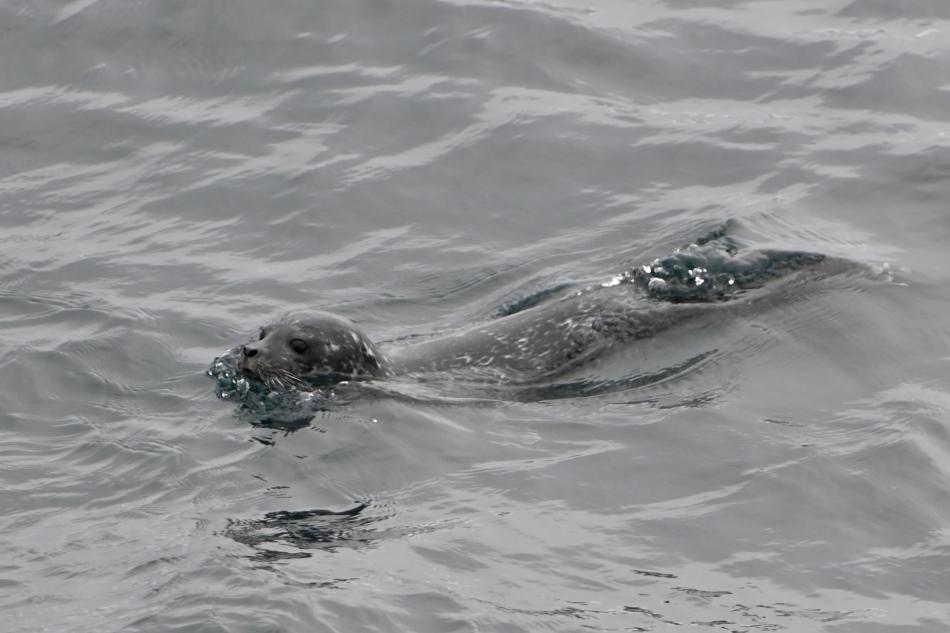
Report from Eldey: This gloomy calm morning we sailed out, eager to see what was out there. On the sail out we spotted multiple minke whales, they were a little elusive but as there were a few around us everyone got a good look. We call them stinky minkes as often we can smell them before we see them! In total we must have seen between 7-10. Further out we spotted a big blow! This belonged to a humpback whale! This was a very calm just feeding individual. We watched on in awe as it fluked multiple times. When other boats came towards the same area we decided to make a move and quickly found a pod of 15-20 white beaked dolphins. These were quite a wide spread traveling pod and at the same time we saw a juvenile harbour seal! This cutie came quite close to us, had a little look and then continued onwards. What a day! We eventally headed back to harbour when time was up, spotting 2 more minkes on the way!
- Ricardo Mendes
CLASSIC WHALE TOUR | 11:00
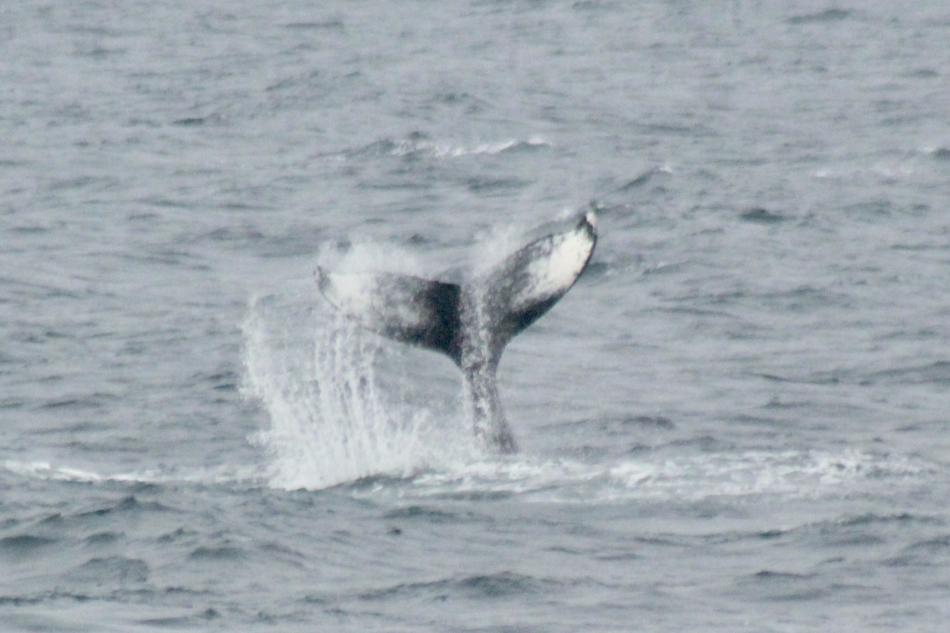
Report from Hafsulan: With no more fog from the past few days and a fresh breeze, we headed out into the bay. While making our way out we encountered one harbor porpoise. This elusive individual gave us one surface sequence before continuing onward. And with that short but sweet sighting we continued onward as well. Shortly after we saw the blow of one humpback whale! We also had one minke whale popping around the boat. The humpback whale then showed us that the food was plentiful as it started to lunge feed for us! This impressive feeding behavior also lead to many birds diving down trying to catch some leftovers. Our humpback came nice and close to the boat which allowed us to get a good look at their entire body. This humpback even treated us to their lovely fluke. With that we waved our humpback goodbye and kept venturing to see who else was about. We then came across two solitary minke whales! They were on either side of the boat which allowed for very frequent sightings. One of these minkes then decided to lunge feed! It was quite an amazing experience to see the minkes actively feeding in this way, as usually they tend to be a bit more elusive for us. With minkes aplenty and one great humpback whale, we counted ourselves lucky and headed back to port. What a great tour!
-Guillermo Monescillo Aragón
CLASSIC WHALE WATCHING | 1300
Report from Eldey: Although the skies over Reykjavík and Faxaflói still remain mostly covered in clouds, the weather today had a great improvement, with most of the fog gone and the sea still remaining calm. Perfect for whale-watching! These good conditions allowed us to do a smooth sailing, out into the bay. It took us less than an hour to have our first sighting of 3 minke whales feeding in the same area, only a few hundred meters away from each other. After spending some time with them, we continued our journey and came across a second group of 3 minkes feeding in the same place. Then quicky after we found our second species, a pod of 5 white-beaked dolphins that, in a typical dolphin behaviour, approached our boat with curiosity and ready to investigate us, before losing interest again and moving on. However, it didn´t take long once more for us to find our 3rd species, the humpback whale! We stayed with an individual going on nice short dives with a high up fluke until we had to conclude our tour and go back home.
- Milan Vansteelandt
CLASSIC WHALE TOUR 15:00
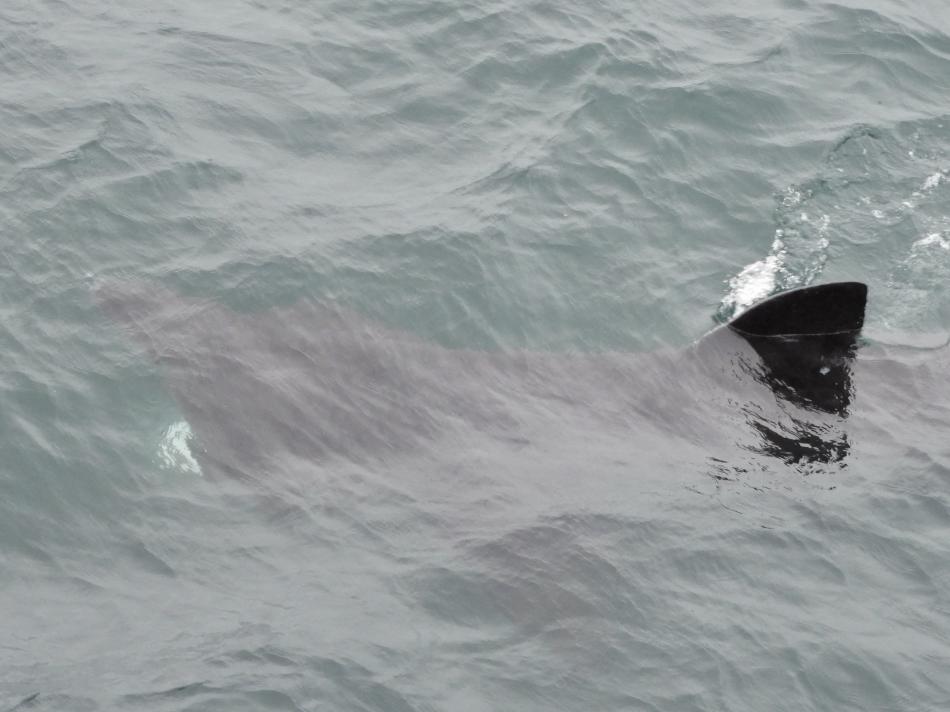
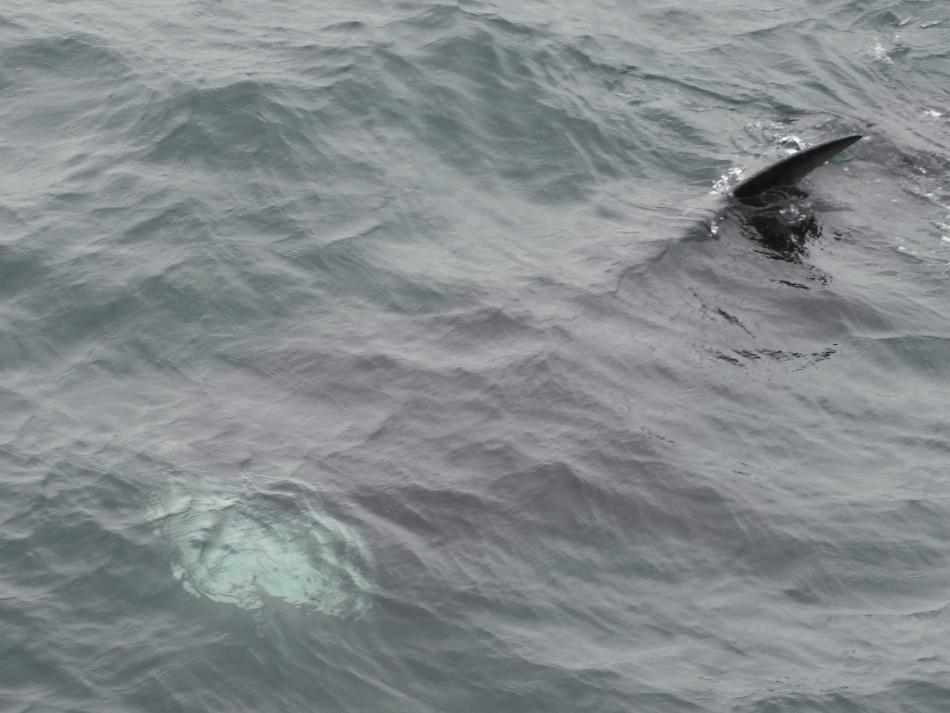
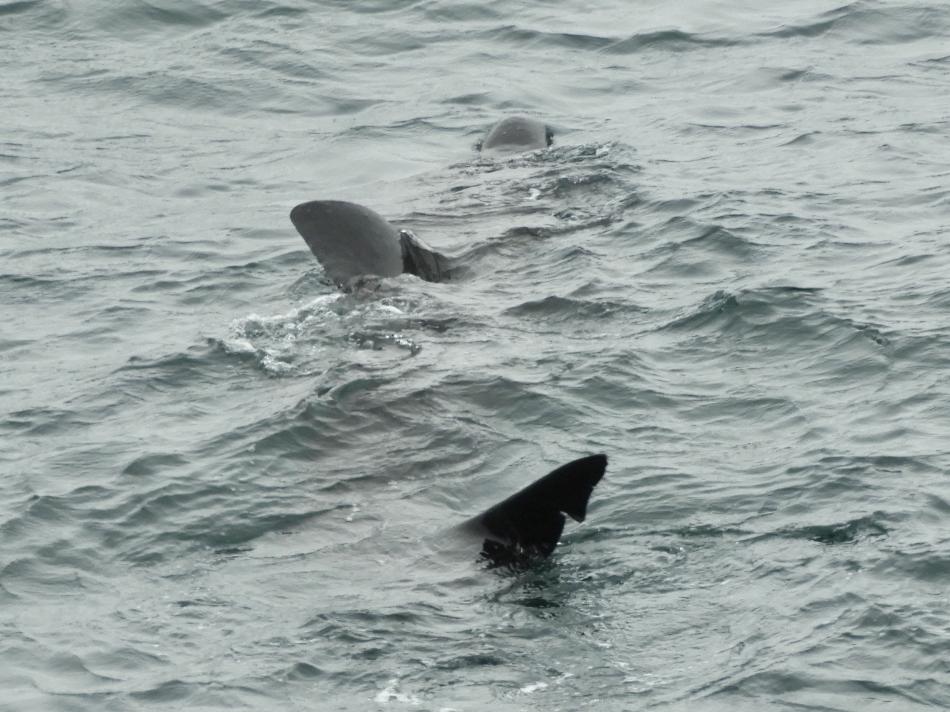
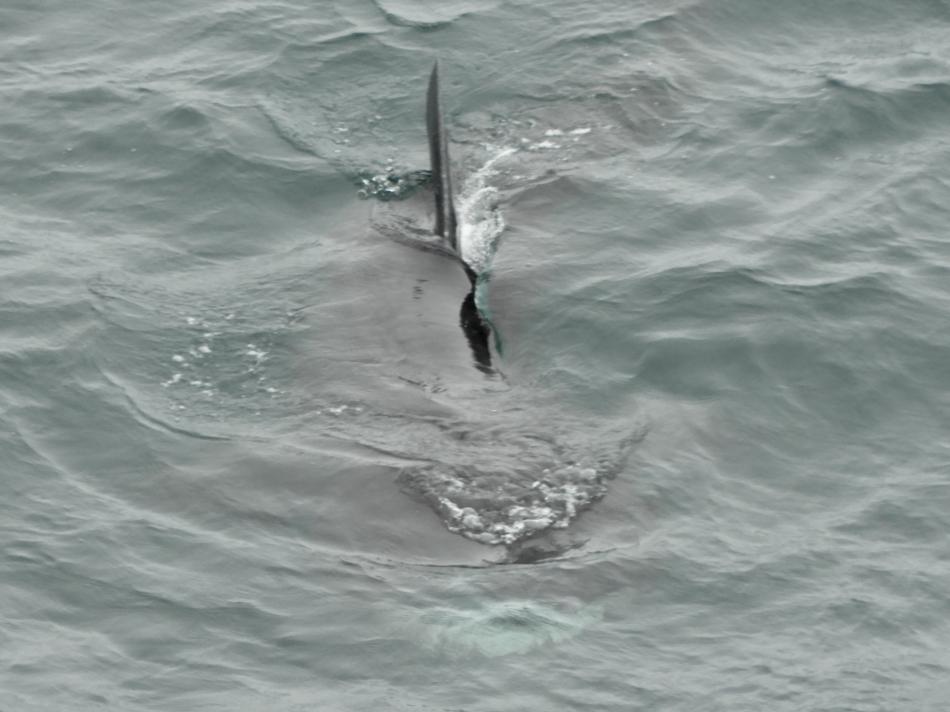
Report from Hafsulan: This afternoon, the fog was again present in our beautiful bay but that didn't stop us from sailing out onto the ocean. Even though the conditions to spot these animals were not the best, we found a blow in the distance that turned out to be a humpback whale. This whale was very focused on having a late lunch so it stayed in the surface for a few minutes before going down for a deeper dive. However, every time it did it it showed us its beautiful fluke. In the area, we found also 3 minke whales that were also feeding close to this whale. Even though these whales are normally more elusive than the humpbacks, we could take a good look at them every time they went to the surface to breath. It was special to have the minkes on either side of the boat to watch while waiting on the humpback to resurface. With multiple surface sequences and flukes galore we waved this humpback and minkes goodbye and went to see who else was around. On the way back we had a special surprise treat as we spotted a beautiful basking shark!!!!! We could clearly see this beauty through the water and were able to have continuous viewing. After basking in this sighting, we waved goodbye and headed back to port. What a wonderful tour!
-Samantha Smith
CLASSIC WHALE WATCHING | 17:00
Report from Eldey: During this tour, we once again had some fog, similarly to the previous days, but this didn´t deter us from finding the whales. Indeed, about 45 minutes (more or less) into our tour, we were surprised by a minke whale, which surfaced less than 50 meters from our boat, making some of our guests on the outside decks scream in joy and surprise. This individual surfaced another two times, moving further away, before disappearing from our sights. We then continued with our tour, searching for more whales and being entertained by the wide variety of birds in the bay, such as puffins, northern fulmars, kittiwakes, common guillemots and artic skuas. Eventually, we saw a humpback whale, which was travelling alone. We hanged around for a few minutes with this humpback, observing it doing unique behaviors like tail slapping and peduncle slapping. Soon after, we left this whale and set course back to Reykjavík, having a smooth sail through the foggy bay.
- Ricardo
CLASSIC WHALE TOUR l 20:30
Report from Elding: We sailed out under the midnight sky, still a bit foggy and the had picked up from the afternoon so there was some swell. We sailed for about 45 min but then we spotted something incredible- a minke whale was breaching! It jumped about 3 times! We waited around in the area but the minke whale had vanished so we carried on with our trip. We then just a few minutes later saw a blow! a humpback whale was close by! We watched it resurface super close to the boat before diving deeper! while we waited for one more dive of the whale some white beaked dolphins showed up, riding our bow! As our time ran out we decided to return to land but we still had a quick visit of some white beaked dolphins!
-
Maria Ernesto
Bird species encountered today:
Atlantic puffin, Northern Gannet, common guillemot, black guillemot, eider duck, lesser and greater black back gull, Northern fulmar, Arctic tern
Wildlife seen on our tours today:

The Humpback Whale is quite spectacular undergoing the longest migration of any mammal (5176miles/8334km one way), attracting females by singing to them and of course their energetic nature. On many occasions humpbacks have been seen breaching, tail slapping, fin slapping, blowing bubbles and spy hopping just to mention a few. The humpback is also one of the larger whales we encounter

The Minke Whale is the most common whale around Iceland and actually the world thus it is one of the main species we encounter on our whale watching tours. It is one of few species that don’t mind coming to shallower waters like here in Faxaflói Bay to feed on the abundant food available to them.

The Harbour Porpoise is the smallest and most abundant cetacean around Iceland. They are usually shy but occasionally they come and play around the boats. They can be relatively hard to spot from a distance due to their size and their abundance depends entirely on the food availability of our shores since they are opportunistic feeders.

The white-beaked dolphin is the most common dolphin found in the surrounding waters of Iceland and is seen not only in the summer but winter too usually in larger numbers, hundreds sometimes. When feeding they show energetic behaviour such as breaching out of the water and coming down with a big splash and bursts of fast swimming.
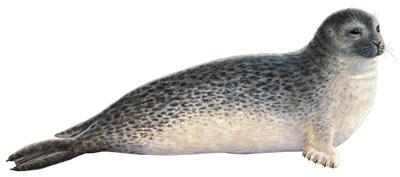
Seals and Sea lions are collectively called Pinnipeds. Harbour Seals are the most abundant in Iceland and are frequently encountered on Akurey (puffin colony). There has been 7 species of seals recorded in Icelandic waters but only two of these species breed here; the Harbour Seal and Grey Seal.
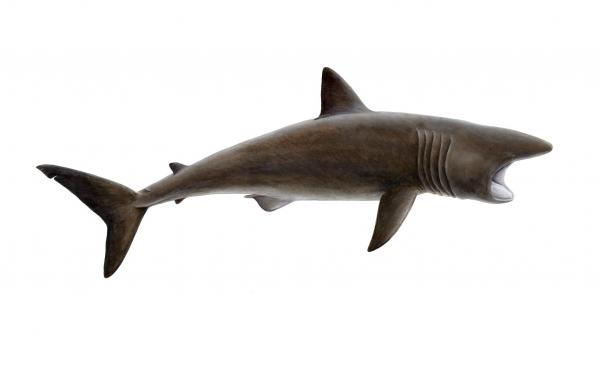
We are seeing more of these over the last couple of years as the water temperatures rise. They get their name by the way they are moving very close to the water surface (basking in the sun) however they are a plankton feeder and this is where the food is.